
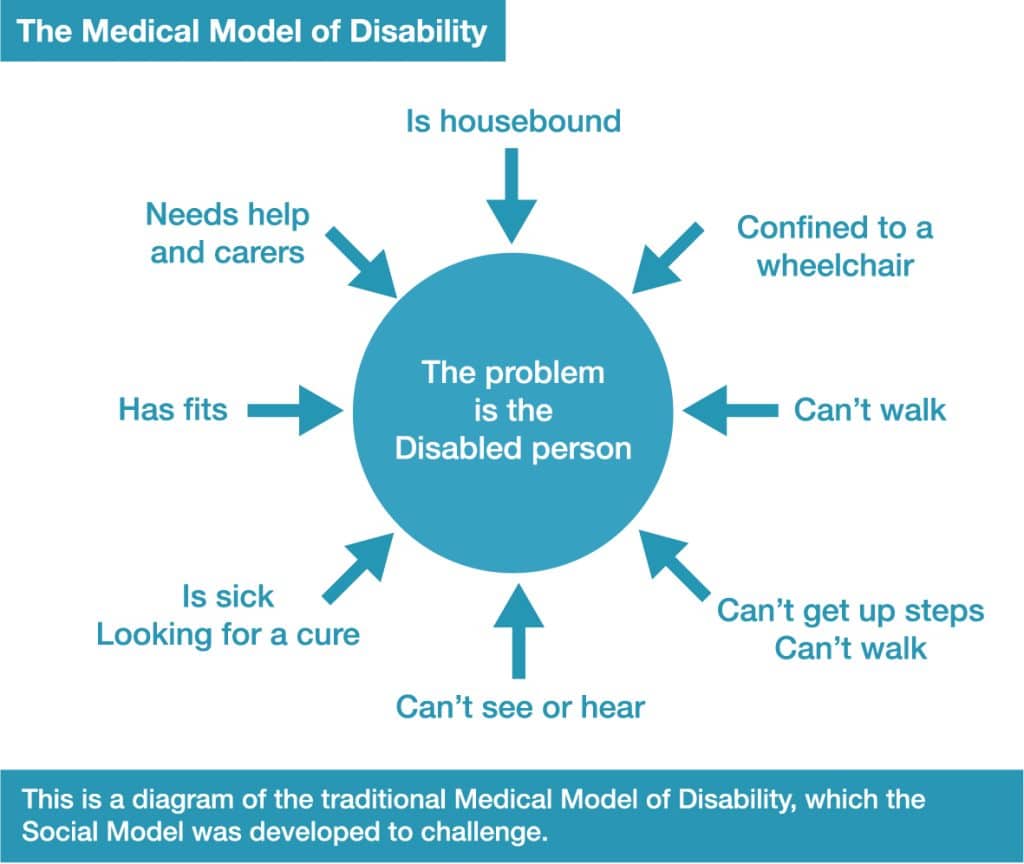
When most people think of “disability,” they immediately think of the impairment itself – difficulty walking, hearing loss, or low vision. But what if the real barrier wasn’t the impairment, but the way society is structured around it?
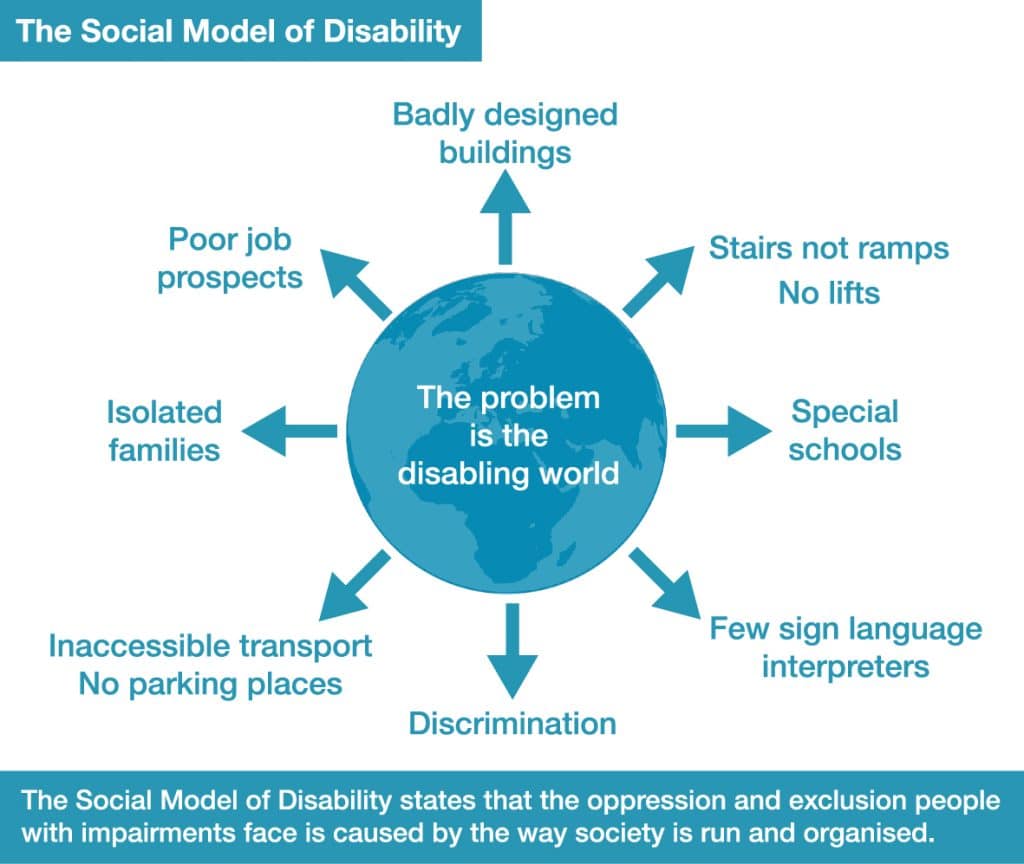
This is the foundation of the Social Model of Disability – a powerful way of rethinking disability and inclusion. Unlike the outdated “medical model,” which focuses on what a person cannot do, the social model shifts the responsibility to society. It tells us: disability is not the problem; societal barriers are the problem.
What the Social Model Means
At its heart, the Social Model of Disability makes a clear distinction:
- Impairment: A physical, sensory, intellectual, or psychological difference in how a person functions.
- Disability: The restriction of opportunities caused by physical, social, or attitudinal barriers in society.
Put simply, a person may use a wheelchair due to an impairment. But what disables them is not the wheelchair; it’s the stairs without a ramp, the restaurant with narrow doorways, or the website that can’t be used with a screen reader.
Why does this mindset matter?
The way we think about disability shapes how we design, build, and interact. If we believe disability is only about the individual, we’ll stop at medical solutions. But if we see that disability is caused by societal barriers, then the responsibility shifts to all of us: businesses, communities, and governments.
This mindset matters because:
- It highlights the importance of universal design – creating environments usable by everyone.
- It reinforces the role of accessibility standards like South Africa’s SANS 10400-S regulations.
- It changes how we interact with people with disabilities, encouraging respect, equality, and inclusion.
The Social Model in Practice
Here’s what applying the social model looks like in everyday life:
- Installing ramps and lifts in buildings so that everyone can enter.
- Offering braille and large-print menus in restaurants, like Mugg & Bean has done.
- Providing captions on videos for people who are Deaf or hard of hearing.
- Training staff in disability etiquette, so that interactions are inclusive and respectful.
Each of these actions removes a barrier. And when barriers are removed, opportunities open.
The Social Model of Disability challenges us all to look at the world differently. Disability is not about individual limitations; it’s about society’s design choices. By changing our environments, systems, and mindsets, we break down barriers and create spaces where everyone belongs.
✨ Accessibility is not a favour – it’s a right. And inclusion benefits us all.
📩 Are you ready to start breaking barriers in your business or community? Let’s connect and create solutions together.